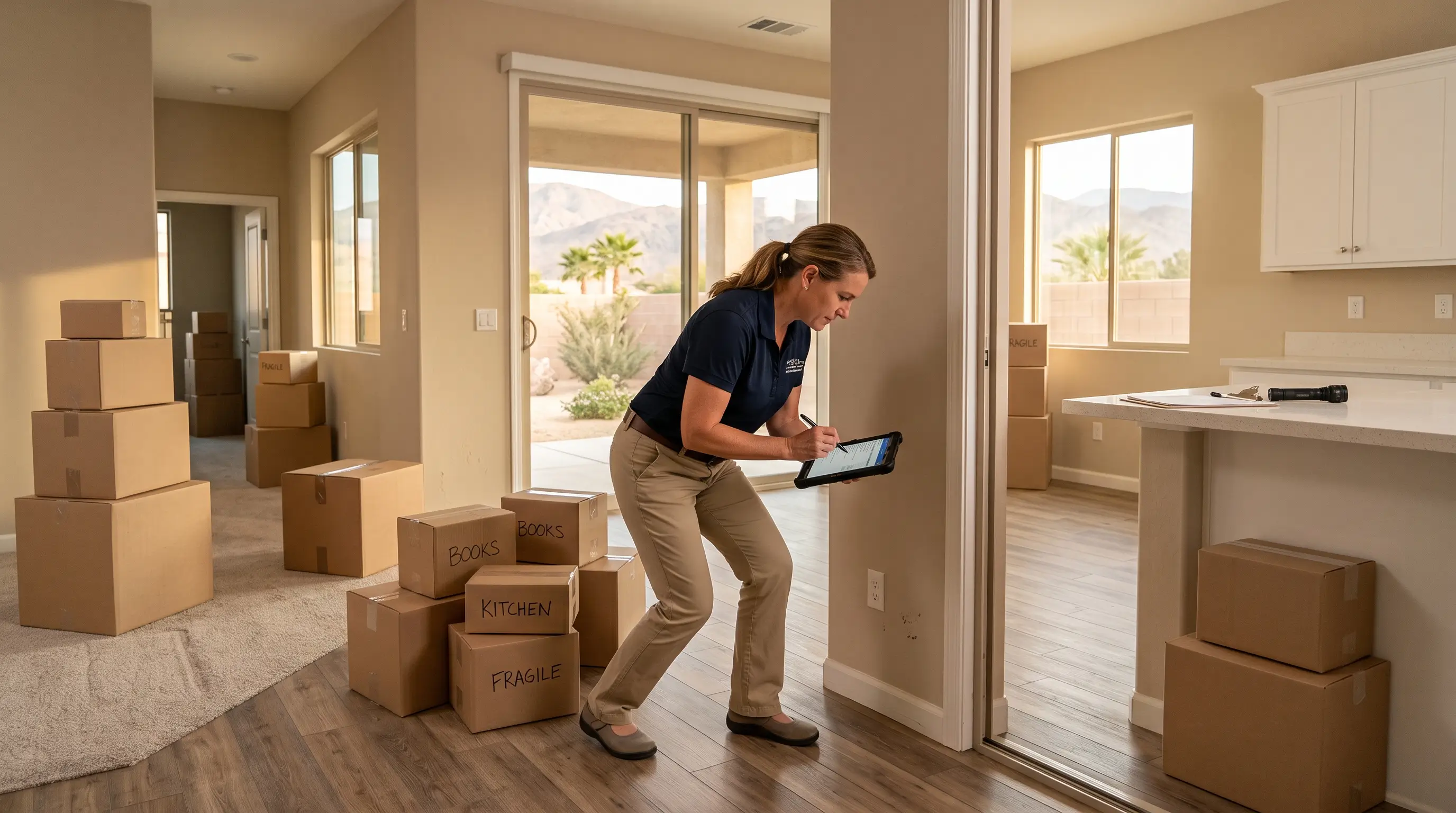
A rental property move-out inspection works by turning every wall, appliance, and outdoor space into a photographed, dated record before a single repair begins, and that record is what shields your investment when a deposit dispute comes up. Skip that step, and a disputed stain or a missed crack can turn into a fight you're likely to lose. With deposits now capped at one month's rent under state law, owners have far less cushion to absorb undocumented damage than they once did.
That's the exact pain point these steps solve, and it's why owners across the valley trust us to run consistent inspections from the day a tenant leaves to the day the next one moves in.
Here's exactly how that process works, step by step, and what each stage does to protect your bottom line.
Key Takeaways
- A documented rental property move-out inspection supports fair, defensible security deposit decisions.
- Photo evidence protects you if a damage dispute ever reaches small claims court.
- Local rent trends make a fast, clean turnover worth more to Palm Desert owners than ever.
- Consistent inspection timing shortens vacancy and keeps your rental income on track.
Step 1: Walk the Property and Compare It to the Move-In Report
The process starts with a full walkthrough, room by room, measured against the move-in report already on file. Every wall, appliance, fixture, and outdoor space gets checked and photographed. Don’t flag every minor scuff. Separate normal wear from genuine damage, since California law treats those two categories very differently when it comes to what an owner can deduct.
Palm Desert brings its own wear patterns into this process. Desert dust works its way into HVAC filters fast, pool equipment needs a closer look, and stucco exteriors show sun and heat damage that a generic checklist tends to miss. Managing properties in this desert environment shows which details deserve extra attention.
| Stage | When It Happens | What We Capture |
|---|---|---|
| Move-in inspection | Before a tenant takes possession | Baseline photos, condition notes |
| Periodic inspection | Throughout the lease | Maintenance flags, lease compliance |
| Move-out inspection | Within days of vacancy | Final condition, damage comparison |
Pro Tip: A quick walk-through can miss a cracked tile behind a rug or a stain tucked under furniture moved back into place. Going room by room closes that gap and gives you a record that holds up if a deduction is ever questioned.
Step 2: Document Every Finding With Timestamped Photos
Next, take photos before any cleaning or repair work begins. Under a 2025 update to California law, landlords must photograph a unit's condition right after move-out, and again after any repair tied to a deposit deduction. According to Bay Legal PC, lawmakers added this requirement because deposit disputes used to come down to one person's word against another's.
Here's what this step covers:
- Immediate move-out photos: Every room gets photographed right after the tenant leaves, before cleaning or repairs.
- Timestamped records: Each photo carries a date and time, so the condition on file can't be second-guessed.
- Post-repair photos: If a deduction leads to repair work, we photograph the unit again afterward.
- Organized owner files: Every photo attaches to a condition report you can reference anytime.
Step 3: Apply Findings to the Security Deposit Decision
Once the walkthrough and photos are complete, we compare everything against the security deposit guidelines that govern what can and can't be deducted under state law. California gives landlords a firm window to act. Per the CSU Long Beach Legal Resource Center, landlords have 21 days after move-out to return the deposit in full or send an itemized statement of deductions.
Miss that window, and the right to withhold anything can disappear, even when the damage was real. That's a tight deadline to meet if documentation is incomplete or scattered. A rental property move-out inspection completed promptly, with photos matched to specific line items, makes hitting that 21-day mark realistic instead of a last-minute scramble.
Step 4: Follow Palm Desert's Legal Guardrails on Deductions
Deductions carry strict limits under state law, and knowing where those limits sit protects you from a dispute that never needed to happen.
What Counts as Ordinary Wear and Tear
You can never deduct ordinary wear and tear from a security deposit, no matter how tempting it is to charge for a faded paint job or carpet worn down after years of normal living. Deductions must reflect actual damage beyond that baseline, and they need documentation to hold up if questioned.
What Happens if a Dispute Reaches Small Claims Court
When a disagreement over deductions does escalate, it typically lands in small claims court. According to the California Courts Self-Help Guide, individuals can sue for up to $12,500 in that venue, and security deposit disputes are among the most common matters heard there. This entire step exists to keep your property out of that situation in the first place.
Pro Tip: Back this step with protections built into our guarantee program. If something falls through during a tenancy despite our process, you won't be left carrying that risk alone.
Step 5: Screen the Next Tenant Before Disputes Can Start
Prevention starts well before a tenant ever moves in. Our careful tenant screening approach filters for renters with a track record of caring for a home, which cuts down on the disputes that tend to surface at move-out.
| Screening Factor | What We Check | How It Protects You |
|---|---|---|
| Rental history | Prior landlord references and move-out condition | Flags applicants with a pattern of damage claims |
| Income verification | Proof of stable income relative to rent | Reduces the risk of missed payments and neglect |
| Background check | Credit and public record history | Surfaces red flags before a lease is signed |
| Maintenance turnaround | Repair and cleaning needs between tenants | Keeps the unit ready without unnecessary downtime |
Pro Tip: A tenant who has consistently left prior rentals in good condition is far less likely to leave you with a damage claim to sort through. When something does need attention between tenancies, our maintenance coordination team handles it quickly, so every vacant week costs less than it otherwise would.
Step 6: Time the Turnover to Protect Your Return
As of August 2026, the average rent in Palm Desert sits around $2,247 a month, according to RentCafe. That figure shows how much a single week of vacancy can cost an owner, which is why speed matters at this final stage. Completing a rental property move-out inspection within days, rather than weeks, shortens the gap between one lease ending and the next beginning.
For owners who live out of state, timing matters even more. We help clients track their properties remotely with reports and photos delivered as soon as an inspection wraps up. If questions come up along the way, our owner FAQ page covers the details owners ask about most.
FAQs about Rental Properties Move-Out Inspections in Palm Desert, CA
What should Palm Desert owners do if a tenant requests to be present during the move-out inspection?
California law allows tenants to request a pre-move-out inspection within two weeks of vacating. We honor that request, walk the unit together, and provide a written list of items that could affect deposit deductions.
Can a Palm Desert rental property owner use a third-party inspector for a move-out inspection?
Yes, owners can hire a third-party inspector. We recommend using one consistent inspector throughout a tenancy, since familiarity with the property's baseline condition makes move-out comparisons more accurate and defensible.
How should owners handle a move-out inspection when the tenant has already returned the keys?
Once keys are returned, we schedule the inspection within days. Prompt timing supports the 21-day deadline for itemized deductions and keeps photo documentation aligned with the unit's true condition.
What happens when utilities are disconnected before a Palm Desert rental property inspection?
We coordinate utility timing with tenants in advance whenever possible. If utilities are already off, we use portable lighting and note any limitations, such as being unable to test appliances, in the inspection report.
Should owners inspect a Palm Desert rental property again after the tenant removes all of their belongings?
Yes. A follow-up walkthrough after belongings are removed catches damage hidden behind furniture or boxes, giving owners a complete and accurate record before finalizing any deposit deductions.
Bringing These Steps Together for Your Investment
A rental property move-out inspection isn't paperwork for its own sake. It's the difference between a smooth deposit return and a dispute that drags on for weeks, between a vacant unit sitting empty and a fast, confident turnover. Every walkthrough, photo, and comparison protects the asset you've worked hard to build.
Here's what working with Coachella Valley Property Management gets you:
- A full walkthrough and condition assessment of your property
- Tenant screening built to protect your home long-term
- Ongoing maintenance coordination between tenancies
- Transparent reporting so you always know where things stand
Ready to put these steps to work for your Palm Desert rental? Start our owner onboarding process today.
***This blog contains images that feature settings and people generated using AI rather than real photographs. These images are for illustrative purposes only and do not depict actual persons or places, unless otherwise stated.***