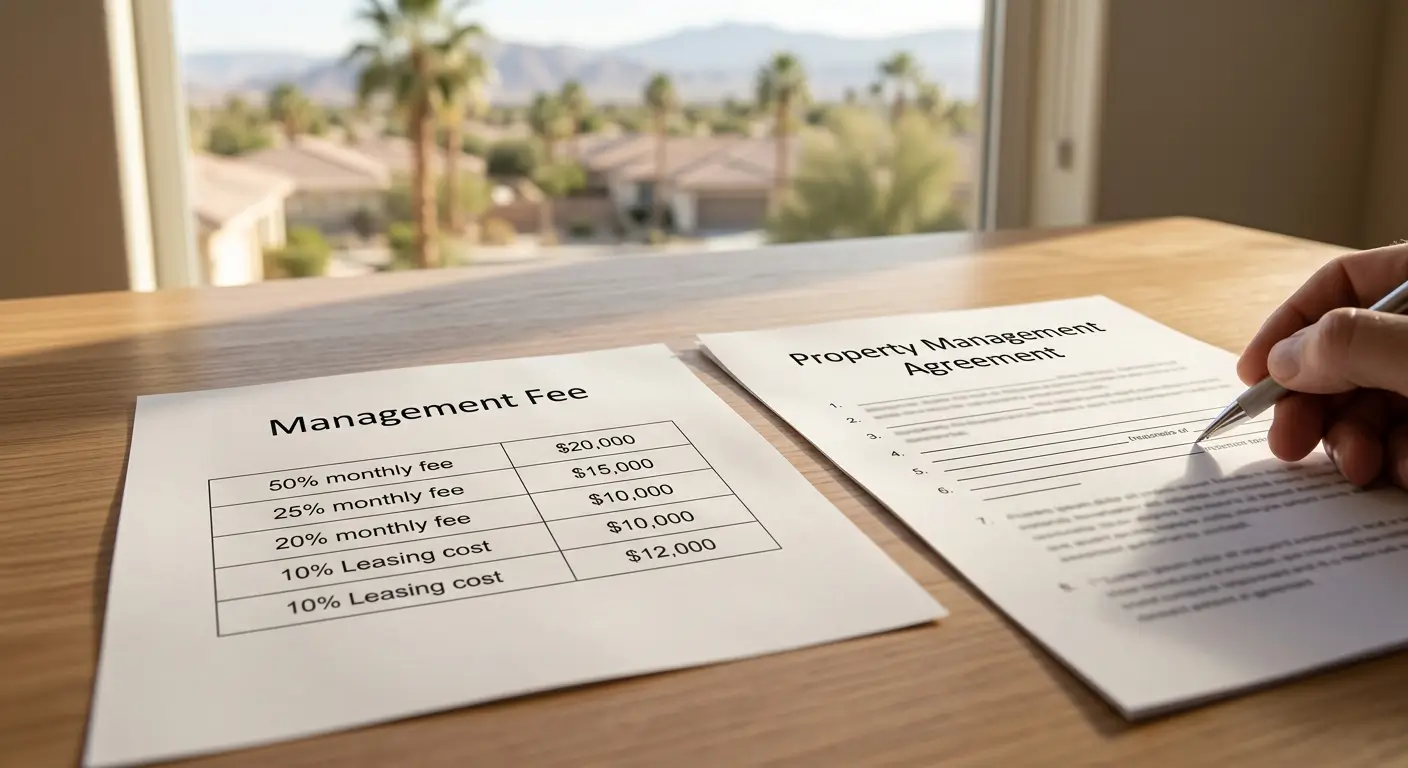
Your monthly fee percentage only tells half the story. What you actually pay depends on leasing charges, renewal terms, and how easily you can exit if the agreement stops working for you. La Quinta's population reached roughly 39,440 residents as of July 2025, according to the U.S. Census Bureau, and that growth keeps rental demand strong across the city.
This guide breaks down every fee type, what's included versus optional, and how the totals compare, so you know what you're signing. If you'd rather see the real document than take our word for it, you can also request a sample copy of your Coachella Valley investment plan and how fees factor into it.
Key Takeaways
- Standard property management fees only cover part of your total cost, and knowing which fee type applies to each service prevents surprises.
- Leasing, renewal, lease-up-only, maintenance markup, and eviction fees each serve a different purpose and get billed differently.
- Sample scenarios that compare total annual costs reveal more than a single monthly percentage ever will.
- A written management agreement, even one you request rather than download, is the clearest way to confirm what you'll actually pay.
A. What Are the Different Types of Property Management Fees?
Property management fees break down into several distinct categories, and each one covers a different part of the rental process.
Leasing Fees
A leasing fee applies when a manager finds and places a new tenant in your property. It typically runs anywhere from half a month's rent to a full month's rent, depending on the company and the scope of work involved.
This fee usually covers marketing the unit, scheduling showings, and completing the tenant screening process from application through background checks. Some companies bundle this into their annual rate, while others bill it separately every time a unit turns over.
Monthly Management Fees
The monthly management fee is what most owners think of as the core cost of hiring a manager. It's usually charged as a percentage of collected rent, most often between 8% and 12%.
This fee generally funds the ongoing work behind the full range of services a manager provides, including rent collection, owner communication, and day-to-day oversight. Standard property management fees at this level cover routine operations, not one-time events.
Renewal Fees
A renewal fee applies when an existing tenant signs another lease term instead of moving out. It's typically lower than a leasing fee since no marketing or new screening is required.
Common renewal fee structures include:
- A flat rate between $150 and $350
- A percentage of one month's rent, often smaller than the leasing fee percentage
- No charge at all, bundled into the annual management rate
Lease-Up-Only Fees
Lease-up-only fees apply when an owner wants help placing a tenant without signing up for ongoing management. This is common for owners who plan to self-manage after the unit is filled.
These fees tend to run higher than a standard leasing fee bundled with management, since the company isn't earning a monthly rate afterward to offset the placement work.
Maintenance Markups
Maintenance markups are added to vendor invoices when a manager coordinates repairs on your behalf. These typically range from 10% to 15% of the repair cost.
A few things affect how much this adds up over a year:
- How often the property needs repairs
- Whether the company uses in-house maintenance staff or outside vendors
- Whether markups apply to materials, labor, or both
Eviction and Legal Fees
Eviction and legal fees cover the cost of filing paperwork, serving notices, and handling court procedures when a tenancy has to end through legal channels. These charges sit outside standard property management fees because they only apply when something has gone wrong.
Before you sign anywhere, review how a company handles this process on its eviction page and check whether any protections apply through its service guarantees, since some companies cover part of the legal cost if a placed tenant needs to be removed.
B. What's Included in Your Fee, and What Costs Extra?
Every management agreement draws a line between what the base fee covers and what gets billed as an add-on, and that line varies from company to company.
Services typically included in a standard monthly fee:
- Rent collection through a consistent rent collection process
- Tenant communication and routine issue resolution
- Basic maintenance coordination for everyday requests
- Monthly financial reporting
Services typically billed separately:
- Leasing and renewal fees, as outlined above
- Maintenance markups on vendor invoices
- Eviction filing and legal costs
- Annual reporting or tax document preparation, depending on the company
Comparing this list with the actual agreement in front of you is one quality to look for in a property manager. A company that lists these clearly, without vague language, is easier to trust than one that leaves you guessing.
C. Why Does Fee Transparency Build Trust in a Management Partnership?
Trust between an owner and a manager starts with knowing exactly what you're paying for and why, not discovering it on a statement three months later.
About 24% of La Quinta households live in renter-occupied homes, according to U.S. Census Bureau data compiled by RentCafe's 2026 market analysis, which means rental management plays a real role in the local housing picture. Owners in this market deserve pricing they can verify.
Transparency tends to show up in a few concrete ways:
- Fees are itemized in writing before you sign, not explained verbally
- Statements match what the agreement says you'll be charged
- Questions about a line item get a direct answer, not a runaround
We built our onboarding process around this idea, and we support it with transparency through owner portals so owners can see activity on their property without calling to ask.
D. How Do Sample Scenarios Compare Your Total Costs?
Numbers make this easier to understand than percentages alone. Here's a simplified comparison for a La Quinta home renting at $6,000 a month, matching the city's median rent as of September 2026, according to Zumper.
| Fee Type | Company A (Lower Base Rate) | Company B (Transparent Full-Service) |
|---|---|---|
| Monthly management fee | 8% ($480) | 10% ($600) |
| Leasing fee | 100% of one month's rent | Included in annual fee |
| Renewal fee | $300 | $150 |
| Maintenance markup | 15% | 10% |
A few takeaways stand out from this comparison:
- Company A looks cheaper because of the lower monthly percentage
- Once leasing and renewal charges are added, the totals often land close together
- In some years, Company A ends up costing more overall
We saw this play out with an owner who came to us after her previous manager quoted a low monthly rate that didn't include leasing or renewal fees. Once she compared her actual annual invoices against our full-service structure, she realized the cheaper option had cost her more.
If you want to run this same comparison yourself, our owner FAQ page walks through how to read a fee schedule line by line, and you're always welcome to request a sample management agreement directly from us before you sign anything.
FAQs about Residential Property Management Fees in La Quinta, CA
Can I terminate a property management agreement before the contract expires?
Yes, depending on the termination clause in your agreement. Some contracts allow termination with advance written notice, while others may require a specific notice period or charge a cancellation fee. La Quinta owners should review the termination section before signing so they understand what happens if the management relationship no longer meets their needs.
How long are residential property management agreements typically locked in?
Contract lengths vary by company and service arrangement. Some agreements run month to month, while others establish an initial term of six months, one year, or longer. A longer commitment can matter if your property circumstances change, so review the initial term and any automatic renewal language alongside the fee schedule.
Who controls my rental property after I hire a property manager?
The owner remains the property owner, while the management company receives authority to perform specific duties outlined in the agreement. That authority may cover routine tenant communication, maintenance coordination, rent collection, inspections, and other operational matters. Owners should confirm exactly what decisions the manager can make without obtaining prior approval.
Will I have to approve every repair made to my La Quinta rental?
Usually, the management agreement sets an owner-approval threshold for maintenance. The manager may authorize routine repairs below that amount, while larger expenses may require your approval. Ask for the exact dollar threshold and find out how emergency repairs are handled when immediate action is necessary.
What happens to my property's reserve funds if I change management companies?
The agreement should explain how owner funds and property reserves are handled when management ends. Ask when remaining funds are transferred, how outstanding invoices are reconciled, and whether any deductions can be made before the final accounting. Having this process in writing can reduce disputes during the transition.
Choosing the Right Fit for Your La Quinta Rental
Standard property management fees only tell part of the story. The real comparison happens when you line up leasing charges, renewal costs, maintenance markups, eviction fees, and contract terms side by side. Owners who take the time to read past the headline rate usually end up with a clearer sense of what they're actually paying and why.
If you'd like to see this in writing, Coachella Valley Property Management is happy to send over a sample agreement so you can review the terms at your own pace. Our La Quinta property management services include:
- Transparent monthly and leasing fee structures explained before you sign
- Tenant screening and placement built into your agreement
- Rent collection and owner reporting through a single portal
- Maintenance coordination with disclosed vendor markups
Fees you can predict. Terms you can trust. That's the difference a clear agreement makes, and it starts with one conversation. Reach out today, and let's build a partnership around managing your La Quinta rental the right way, fees, terms, and results included.
Related Articles
What Should Be Included in Palm Desert Monthly Property Management Reports
What Does a Property Manager Really Do in Palm Springs? Roles and Responsibilities