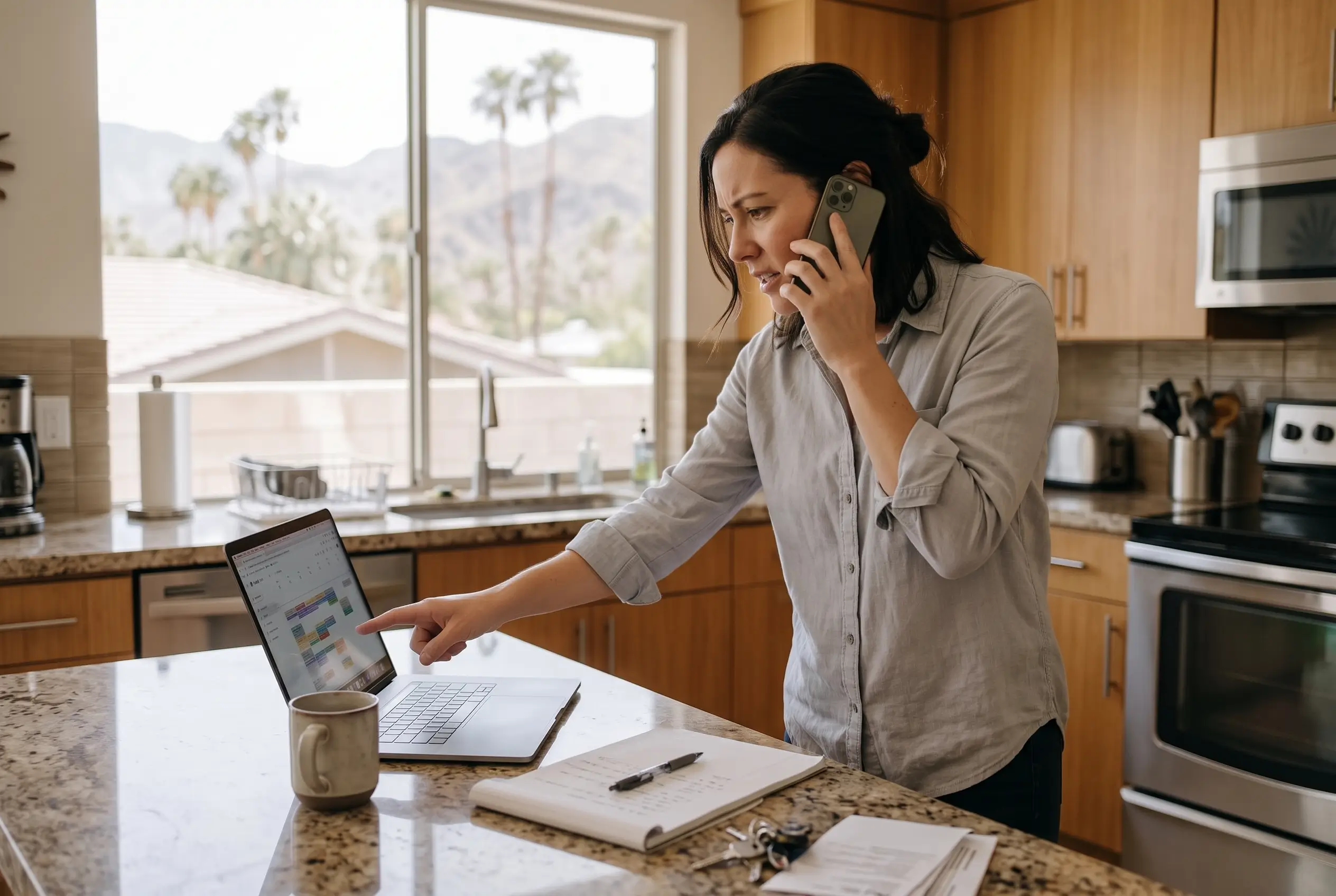
Every maintenance issue in your Palm Desert rental should move through a visible chain of custody, from the moment a tenant calls to the day the invoice is paid, with no step left unrecorded. That standard matters more as the city grows, with the population reaching 53,259 residents in 2025, according to the U.S. Census Bureau, and rental demand holding steady across the Coachella Valley.
This guide explains how we build accountability into request intake, emergency triage, vendor selection, approvals, updates, quality control, invoices, and owner reporting for your single-family rental home.
Key Takeaways
- Every repair request gets logged with a timestamp, description, and priority level the moment it comes in.
- Emergencies like no air conditioning or a gas leak jump the line, with response times guided by California’s “reasonable time” standard.
- Every vendor carries a current license and insurance, with Palm Desert’s desert climate shaping which specialists we keep on call.
A. Every Repair Starts on the Record
Every repair begins with a logged request, not a missed text or a forgotten voicemail. Tenants submit issues through our portal, by phone, or by email, and each one gets a timestamp, a description, and a priority level before any vendor gets a call.
We ask tenants to describe what happened, when it started, and whether it affects water, power, or safety. Requests that follow our maintenance request guidelines move faster to the next stage because the details are already there.
B. Emergency Triage: What Cannot Wait
An emergency is any issue that threatens safety, security, or habitability, and it jumps to the front of the line. In a desert climate like Palm Desert’s, that usually includes:
- No air conditioning during extreme heat
- No running water or a major plumbing leak
- An exposed electrical hazard, often tied to strained AC units
- A broken lock or door that compromises security
- A gas leak or suspected carbon monoxide issue
Under Civil Code Sections 1941 and 1942, landlords must address these conditions within a “reasonable time,” and the California Department of Real Estate notes that while 30 days is generally reasonable for routine repairs, a severe condition can shrink that window to just one or two days.
A broken air conditioner in July moves ahead of a loose cabinet hinge every time. Staying on top of tracking requests during heat helps us catch cooling failures early.
C. Choosing Who Works on Your Rental
Not every available contractor belongs on your property. A reliable process checks a few things before anyone gets a work order.
License and Insurance Come First
A vendor should only touch your property if they carry a current license, active insurance, and a track record on single-family rentals. California raised its contractor licensing threshold to $1,000 in combined labor and materials as of January 1, 2025, so any larger repair legally requires a valid CSLB license.
Local Expertise for a Desert Climate
A Palm Desert rental usually needs HVAC technicians who understand desert cooling systems, plumbers familiar with older Coachella Valley plumbing, and pool equipment specialists on hand.
Vetting Vendors Like You Vet Tenants
The same diligence behind a tenant screening process applies to vendors, since an unqualified technician creates the same risk as an unscreened tenant.
One of our owners called after her tenant reported the home’s air conditioning compressor had failed during a week when highs topped 112 degrees. We dispatched a licensed HVAC vendor within hours, and cool air was restored before the end of the day.
D. Approvals: Who Signs Off Before Work Begins
You set the approval threshold, and we follow it exactly. Most owners authorize us to approve repairs under a set dollar amount without a call, which keeps emergencies moving instead of stalling while we try to reach you.
Anything above that threshold should come with the vendor’s estimate attached before work starts, not after. These limits are usually set early, during the owner onboarding process, so there is never confusion later about who can authorize what.
E. Staying Informed From Start to Finish
You get a status update at every meaningful step, not just a call when something breaks. For larger renovations, we send progress notes at each milestone so the project never feels like a black box.
Coachella Valley heat adds urgency to these updates, since DesertWeather.com recorded 105 days at or above 100 degrees in Thousand Palms in 2025. Owners weighing a bigger renovation often check a rental return calculator first to see how the project affects long-term returns before updates even begin.
F. Quality Control: Confirming the Repair Was Done Right
A closed work order isn’t the same as a finished job. Before marking any repair complete, we confirm:
- The original issue is actually resolved, not just masked
- The fix matches what the vendor was approved to do
- Surrounding fixtures show no new damage from the work
- Photo documentation exists when an immediate visit isn’t possible
This habit ties directly into our broader inspection routine. Owners often ask how often inspections happen on their property, and routine visits catch small issues like slow leaks before they turn into costly repair calls.
G. Verifying Every Cost Before You Pay
A repair invoice shouldn’t surprise you. Before any cost touches your account, we work through the same sequence every time:
- Match the invoice against the original estimate the vendor provided
- Flag any amount that runs higher than quoted
- Request a written explanation for the difference before approving payment
- Confirm the work described actually matches what was completed
- Record the final invoice against your monthly statement, not as a standalone charge
With average monthly rent in Palm Desert near $2,242, according to RentCafe, protecting that income means justifying every repair dollar on paper. That is what consistent financial reporting is for, tying each invoice back to your monthly statement instead of leaving it as a mystery charge.
H. Owner Reporting: Seeing the Full Picture
A Palm Desert owner should be able to review every repair, invoice, and vendor note from their own device, anytime, without waiting for a callback. This kind of owner-portal transparency separates a documented process from a guessing game, since nothing about a rental’s maintenance history should stay hidden in a filing cabinet or buried in an old email thread.
This level of detail makes remote ownership workable. Every step gets documented, and every dollar gets explained, instead of summarized away in a single monthly total that raises more questions than it answers.
FAQs about Rental and Repair Accountability in Palm Desert, CA
Who pays when a tenant causes damage that would normally be considered a maintenance issue?
The tenant is responsible for damage caused by their own negligence, guests, or pets. We document the cause during inspection and bill the repair cost back to the tenant instead of charging it to the owner.
How do you determine whether a repair is the tenant’s responsibility or the owner’s responsibility?
We look at the cause, not just the symptom. Normal wear and habitability issues fall on the owner, while damage from misuse, neglect, or an unauthorized change falls on the tenant.
What happens when a tenant refuses to pay for damage they caused to the rental?
We document the damage with photos and the original lease terms, then pursue the cost through the security deposit first. If that falls short, we pursue remaining balances through standard collection channels.
How are appliance repairs handled when the appliance is still under a manufacturer warranty?
We contact the manufacturer directly to schedule warranty service before dispatching an outside vendor. This avoids voiding coverage and keeps the owner from paying for a repair that should be free.
What happens when a contractor’s work causes additional damage to my Palm Desert rental?
The vendor’s insurance and license are there for exactly this situation. We document the damage immediately and file a claim against the contractor’s coverage rather than leaving the cost with the owner.
Give Your Palm Desert Rental the Oversight It Deserves
Rental and repair accountability covers every step from the first phone call to the final invoice. When every request gets logged, every vendor gets vetted, and every dollar gets explained, your Palm Desert rental home stays protected, and your return stays steady.
At Coachella Valley Property Management - Palm Desert, our maintenance coordination services cover the entire process for your single-family rental home.
- Repair request intake and emergency triage
- Licensed, insured vendor coordination
- Approval tracking and cost verification
- Quality checks and completed work documentation
- Invoice review and owner reporting
Every missed repair call costs you more than a vendor fee, it costs tenant trust. Stop chasing invoices and put our maintenance services to work for your Palm Desert rental.
Related Articles
Palm Desert Rental Property Move-Out Inspection Steps That Protect Your Investment
What Should Be Included in Palm Desert Monthly Property Management Reports
Palm Desert's Best-Kept Secrets: Local Amenities That Boost Rental Appeal